
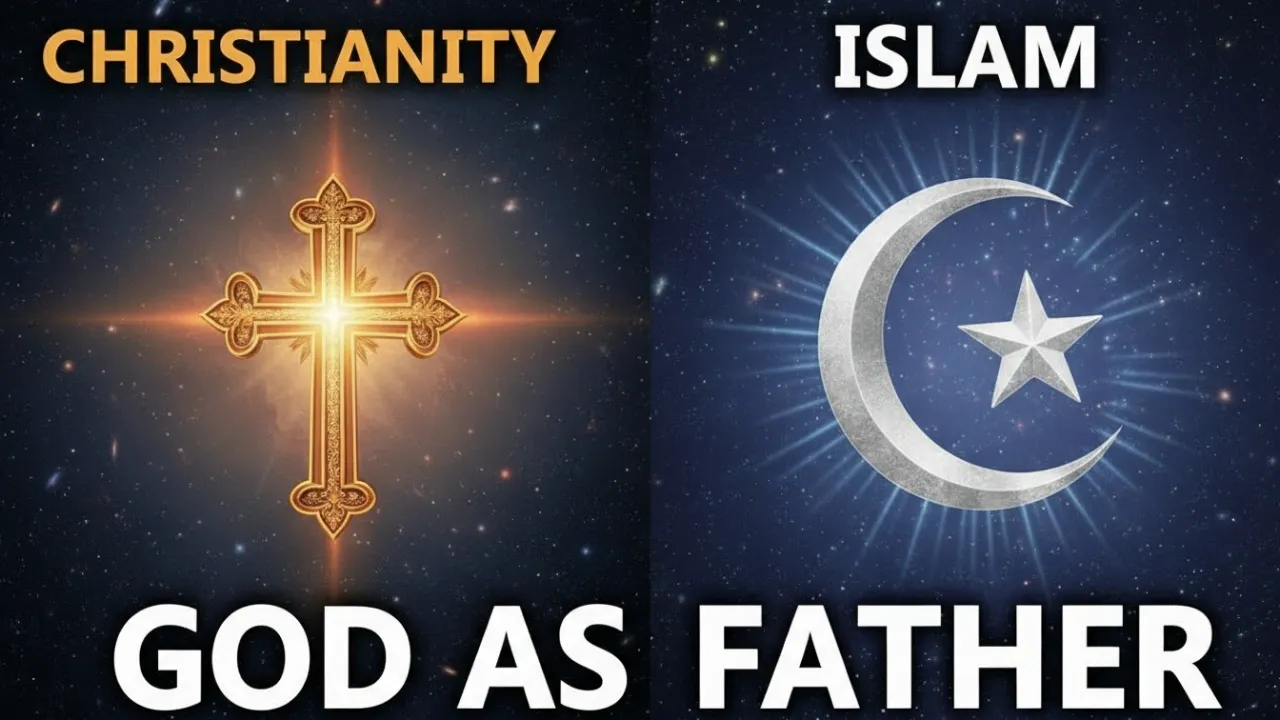
God as ‘Father’ Understanding The Key Difference Between Christianity & Islam
Intro
In one faith, God is called ‘Father’—a name that speaks of closeness, love, and a deep, personal bond. In another, that very same name is firmly rejected, seen as a threat to God’s absolute oneness. How can a single word, ‘Father’, reveal such a massive, seemingly unbridgeable divide between Christianity and Islam, the two largest religions on the planet?
Hook
So, what’s really going on here? This isn’t just a squabble over preferred titles. This one-word difference points to completely different concepts of God’s nature, the identity of Jesus Christ, and the very path to salvation itself. The relationship you have with the Divine—whether as a child to a loving Father or as a servant to an almighty Master—changes absolutely everything. It defines how you pray, shapes your identity, and offers vastly different answers to life’s most profound questions. We’re going to break down the core theological and relational reasons behind this critical divide.
Section 1: The Christian Understanding of God as Father
To really get the Christian worldview, you have to start here: God is Father. And this isn’t just one name among many; it’s the primary way Jesus Christ revealed God to humanity. When his disciples asked him how to pray, he didn’t give them some complex, formal script. He gave them two words of shocking intimacy: “Our Father.” That simple address, found in Matthew chapter 6, completely revolutionized how people understood God. For the Jewish people at the time, God was sometimes called a father to the whole nation of Israel, but this direct, personal address was radical. It shifted the relationship from a national one to a deeply personal, family one.
The Apostle Paul takes this even further. In Romans, chapter 8, he explains that people led by God’s Spirit are “sons of God.” He writes, “For you did not receive the spirit of slavery to fall back into fear, but you have received the Spirit of adoption as sons, by whom we cry, ‘Abba! Father!’”. ‘Abba’ is an Aramaic word. It’s a term of incredible affection, much closer to ‘Daddy’ than the formal ‘Father.’ It’s what a young child would say, expressing total trust. What Paul is saying here is revolutionary: through faith in Christ, believers aren’t just pardoned subjects; they are legally and spiritually adopted into God’s own family, sharing in the inheritance of the Son, Jesus Christ.
But this idea of Fatherhood isn’t just a nice metaphor for God’s care. It’s rooted in the very nature of God Himself, as explained in the doctrine of the Trinity. Christianity teaches one God who exists forever in three distinct persons: the Father, the Son (Jesus Christ), and the Holy Spirit. The Father and Son’s relationship didn’t start at some point in time; it’s eternal. The Father eternally “begets” the Son—not in a physical sense, but as an eternal act of love within the Godhead itself. John 3:16, maybe the most famous verse in the Bible, says, “For God so loved the world, that he gave his only Son, that whoever believes in him should not perish but have eternal life.” The Son is “only begotten,” meaning he is utterly unique and shares the same divine nature as the Father.
This Trinitarian idea is key. God is Father before He is Creator. Fatherhood isn’t just a role He plays for us; it’s part of who He is. And because God is, in His very essence, a community of love between Father, Son, and Spirit, He can then extend that love outward and invite us into it. We can become children of God because God has an eternal Son. Our adoption is a chance to participate in the Son’s own relationship with the Father.
This changes everything. A relationship with a Father is totally different from one with a distant king.
First, it means love and security. A perfect Father’s love is unconditional. Jesus told the story of the Prodigal Son in Luke 15, where a son disgraces his father and wastes his inheritance. When he finally comes home, planning to beg to be a servant, his father sees him from far away, is filled with compassion, and runs to embrace him. That’s the image of God the Father in Christianity: a Father who can’t wait for his kids to come home, whose love isn’t based on their performance.
Second, it implies discipline. Hebrews chapter 12 is clear: “Endure hardship as discipline; God is treating you as sons.” From a Christian perspective, suffering isn’t always a sign of God’s anger. It can be the loving, corrective discipline of a Father training his children for their own good. It’s discipline aimed at making you better, not just punishing you.
Third, it implies an inheritance. A servant gets wages, but a son gets an inheritance. Paul says in Romans 8 that if we’re children, then we are “heirs—heirs of God and co-heirs with Christ.” This points to a secure future, a destiny that’s a birthright.
So for a Christian, calling God “Father” is a packed theological statement. It’s about the nature of God as a loving Trinity, the identity of believers as adopted children, and a relationship defined by intimate love and a guaranteed future.
Section 2: The Islamic Rejection of God as Father
Now, let’s turn to Islam, where we find a complete and total rejection of this idea. In Islamic theology, calling God ‘Father’ isn’t just seen as wrong; it’s a dangerous error that stems from the single most foundational principle in all of Islam: Tawhid.
Tawhid is the absolute, indivisible oneness of God, or Allah in Arabic. It means God is one, utterly unique, with no partners, no equals, and no divisions. This is the core of the Islamic declaration of faith, the Shahada: “There is no god but God, and Muhammad is His prophet.” Anything that could possibly compromise this absolute oneness is considered shirk—the act of associating partners with God. And in Islam, shirk is the single gravest and only unforgivable sin if one dies without repenting from it.
From this viewpoint, the title ‘Father’ is incredibly problematic.
First and foremost, it implies having a child and procreation. The Quran is crystal clear on this. Surah Al-Ikhlas (Chapter 112), a foundational chapter, gives the definitive statement: “Say, ‘He is Allah, [who is] One. Allah, the Eternal Refuge. He neither begets nor is born, Nor is there to Him any equivalent.'” This is seen as a direct refutation of the Christian idea of God having a Son. The concept of ‘begetting’ suggests a biological process, which is seen as completely inappropriate for the transcendent nature of God. In Islam, God is absolutely other, beyond human traits like gender or family relationships.
The Quran directly challenges the Christian doctrine in Surah An-Nisa (Chapter 4), verse 171: “O People of the Scripture, do not commit excess in your religion or say about Allah except the truth… And do not say, ‘Three’; desist—it is better for you. Indeed, Allah is but one God. Exalted is He above having a son.” Using terms like Father and Son is viewed as “excess in religion,” a departure from pure monotheism.
Second, the idea of Fatherhood is seen as a threat to God’s absolute sovereignty. In Islam, the core relationship between God and humanity is that of a Master (Rabb) and His servant or slave (‘abd). The very word ‘Islam’ means ‘submission’ to Allah’s will. This relationship is built on God’s total authority and our complete obedience. A father-child dynamic, from this perspective, might imply a level of familiarity or equality that’s considered inappropriate. The Quran even points this out in Surah Al-Ma’idah, “But the Jews and the Christians say, ‘We are the children of Allah and His beloved.’ Say, ‘Then why does He punish you for your sins?'”. The argument is that if you were truly a beloved child, you wouldn’t be punished for your sins in the same way a subject is by a king.
While Christians might see discipline as a sign of a Father’s love, the Islamic view sees punishment for sin as proof against a family relationship. The relationship is between a Sovereign King and his subjects. The King can be incredibly merciful and compassionate, but the dynamic is one of authority and submission, not family intimacy.
This brings us to the 99 Names of Allah. These are beautiful names from the Quran and Hadith that describe His attributes, like Ar-Rahman (The Most Compassionate), Al-Malik (The King), and Al-Khaliq (The Creator). They reveal His character, but none of them are family terms. He is the Most Merciful Master, but never a Father. The love of Allah is a quality of His divine majesty, given to servants who earn it through obedience, rather than the built-in, unconditional love of a Father for a child.
So, the Islamic rejection of ‘God as Father’ is a fierce defense of God’s transcendence and absolute oneness. It’s a protection against tashbih—the mistake of likening God to his creation. By sticking to the strict Master-servant model, Islam aims to preserve the infinite distinction between the Creator and the created.
Section 3: The Role of Jesus (Isa) in this Difference
The person standing right at the center of this massive divide—between God as Father and God as Master—is Jesus of Nazareth, known in Islam as Isa ibn Maryam. Both faiths actually agree on a lot about him: his miraculous virgin birth, that he performed miracles, and that he is the Messiah. But that common ground quickly disappears, leading to a core disagreement about who he is, which ultimately decides everything.
In Christianity, Jesus isn’t just a way to the Father; he is the way. The whole idea of believers being adopted as God’s children rests on Jesus’s unique identity as the eternal Son of God. Jesus says it himself in the Gospel of John, “I am the way, and the truth, and the life. No one comes to the Father except through me.” A few moments later, he makes the even more shocking claim: “Whoever has seen me has seen the Father.”
For Christians, Jesus is the perfect revelation of God the Father. He isn’t a created being who earned a special status; he is God the Son, the second person of the Trinity, who took on a human body—an event called the Incarnation. He shares the very same divine essence as the Father. So when Jesus calls God his Father, it’s not a metaphor; it’s a statement of fact about who he is.
It’s only by being united with Jesus that believers get the status of “sons and daughters of God.” Ephesians 1:5 says God “predestined us for adoption to himself as sons through Jesus Christ.” The logic is simple: because Jesus is the true, eternal Son, those who are “in Christ” by faith are brought into that same family relationship. They get to share in his sonship. That’s why a Christian can cry out “Abba, Father”—they are echoing the same intimate relationship the Son has with the Father. Without the divinity of Christ, the whole Christian concept of relating to God as a Father falls apart.
And this is exactly where Islam draws its firmest line. In Islam, Jesus, or Isa, is held in very high regard. He’s considered one of the five greatest prophets of all time. The Quran confirms his virgin birth, his miracles, and his role as the Messiah sent to the Children of Israel.
However, Islam absolutely and categorically denies that he is divine or the son of God. To a Muslim, the idea that any prophet, no matter how great, could be the Son of God is the ultimate shirk—associating a created being with the Creator. The Quran presents Jesus as a human prophet, a servant of Allah, just like all the prophets before and after him. In Surah Maryam, the infant Jesus is said to have spoken from the cradle, and his first words are, “Indeed, I am the servant of Allah.” This is seen as correcting, from the very beginning, the future Christian belief in his divinity.
The Islamic view is that Jesus was a great man and a messenger of God, but he wasn’t God or the Son of God. The Quran says in Surah Al-Ma’idah, “The Messiah, son of Mary, was not but a messenger; [other] messengers have passed on before him.” It places him firmly in the line of human prophets.
On top of that, Islam rejects the cornerstone event of the Christian faith: the crucifixion and resurrection. The Quran teaches that Jesus was not crucified; it was only made to appear that way. Instead, Allah rescued him and raised him to heaven alive. This difference is massive. For Christians, the Cross is the ultimate act of the Father’s love, where He gives His Son to pay for the sins of the world, making our adoption possible. For Muslims, the idea that God would allow one of His greatest prophets to be tortured and killed by his enemies is unthinkable. A powerful and merciful God would surely save His faithful servant.
So you see the direct link. Christianity says: Jesus is the divine Son, and through his death and resurrection, he makes it possible for us to be adopted as children of his Father. Islam says: Jesus is a human prophet, a servant of God, who was saved from death. To call him the Son of God is to commit the greatest sin and to misunderstand who God is and who Jesus is. The whole disagreement over whether God is a ‘Father’ or a ‘Master’ comes down to who you believe Jesus is.
Section 4: Implications for the Believer’s Life
So what does this all mean for the daily life of a believer? This theological divide isn’t just for scholars; it has huge, practical consequences for how Christians and Muslims experience their faith every single day.
Let’s think about the Christian experience first.
The idea of God as Father creates a deep sense of intimacy in prayer. Jesus taught his followers to pray to “Our Father,” setting up a model for direct, conversational prayer. The book of Hebrews encourages believers to “draw near with confidence to the throne of grace.” That confidence isn’t a servant’s boldness before a king; it’s a child’s trust in a loving dad. The relationship is personal and secure.
This also shapes a Christian’s identity. The apostle John writes, “See what kind of love the Father has given to us, that we should be called children of God; and so we are.” This gives a powerful sense of worth that isn’t tied to what you do or achieve. Your value comes from who you are: a beloved child of the King. This is a source of deep emotional security, especially during tough times. When facing trials, a Christian can see them not as God being angry, but as the loving discipline of a Father shaping them for the better.
Finally, the relationship promises an inheritance. A servant works for a wage, but a child inherits the family estate. For Christians, salvation isn’t just being forgiven, it’s being adopted into a family with a guaranteed inheritance of eternal life in the Father’s house.
Now, let’s contrast this with the life of a Muslim.
The Master-servant relationship fosters a powerful sense of reverence and submission. ‘Islam’ means submission, after all. The primary virtue is obedience. This creates a relationship that’s more formal and structured. Prayer in Islam, or Salah, is a highly structured ritual performed five times a day, with specific postures like bowing and prostrating, and reciting specific verses in Arabic. This is all designed to show a servant’s complete submission before their almighty Master. It’s less of a conversation and more of a formal audience with the Sovereign.
A Muslim’s identity is an ‘abd-Allah’, a servant or slave of Allah. This fosters deep humility and a constant awareness of one’s duty to obey. There’s a profound sense of purpose in this, a peace that comes from aligning your will with the will of the Creator of the entire universe.
When facing suffering, a Muslim often sees it as a test (fitna) from Allah or a result of sin. The main response is sabr, or patient endurance, trusting in the wisdom of Allah’s plan even when it’s hard to understand. The dynamic is that of a servant trusting the mysterious ways of their Master.
As for the future, salvation in Islam depends on Allah’s mercy combined with a person’s lifelong record of faith and good deeds. On the Day of Judgment, deeds are weighed on a scale. There is a strong hope for Paradise, but it’s not the same kind of guaranteed inheritance that comes with being a child. It’s something to strive for through a life of submission, with the final outcome resting only in the hands of the ultimate Judge.
So you have two very different paths. The Christian path is one of intimacy, adoption, and assurance, built on being a child of a loving Father. The Islamic path is one of submission, reverence, and striving, built on being a servant of an all-powerful Master. Both paths are walked with deep sincerity, but the journey, the relationship, and the hope are fundamentally different—all stemming from that one powerful word: Father.
Conclusion
The difference over calling God ‘Father’ isn’t a small detail; it’s a fundamental fork in the road. For Christians, the Fatherhood of God, revealed through Jesus the Son, is the heart of their faith. It defines a relationship of intimate love, adoption, and grace—the good news that people can become sons and daughters of God.
For Muslims, the absolute oneness of God—Tawhid—is the non-negotiable foundation. From that view, the idea of a Father and Son is a dangerous compromise of God’s divine nature, the very definition of shirk. The true and proper relationship is that of a submissive servant to an all-powerful Master.
This single word uncovers two entirely different ways of seeing God, two different views of Jesus, and two different paths for relating to the Divine. Understanding this difference is key to understanding what each of these two great faiths truly teaches.
How does your understanding of God shape your daily life? Share your thoughts respectfully in the comments below. And if you found this explanation helpful and want to see more content that explores the depths of faith, please like this letter and subscribe to the YouTube channel. Thank you for reading.